N° 007

Falco peregrinus
Horus Fuzz
Regal, versatile, powerful.
$129 read more →
Bending tubes.
The Buffalo Weaver Overdrive is a modern iteration of the classic DIY circuit from the archives of Guitar Magazine. This pedal was designed to bridge the gap between the Tube Screamer and the Tone Bender. It delivers that 'bent' vacuum tube tone in a small enclosure.
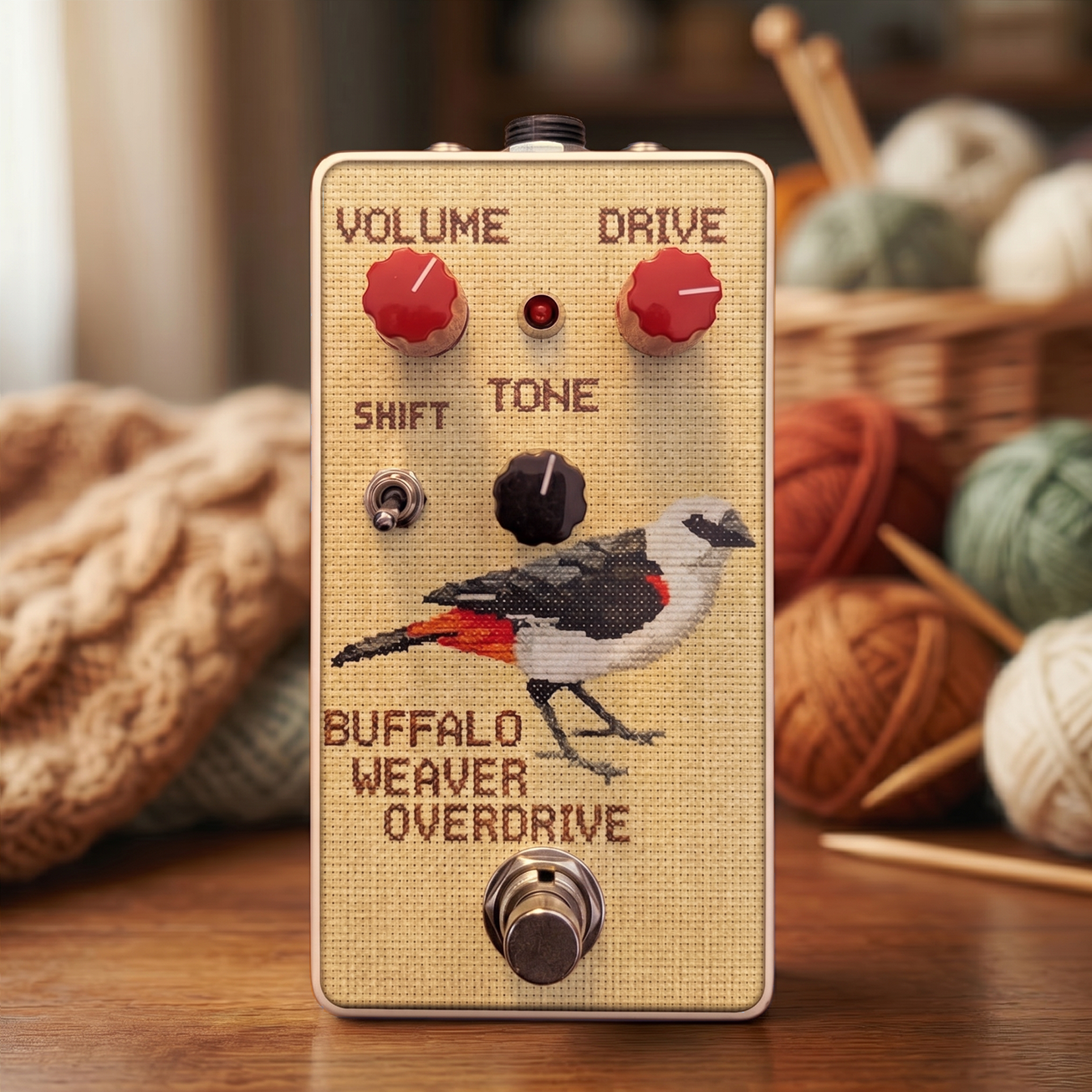
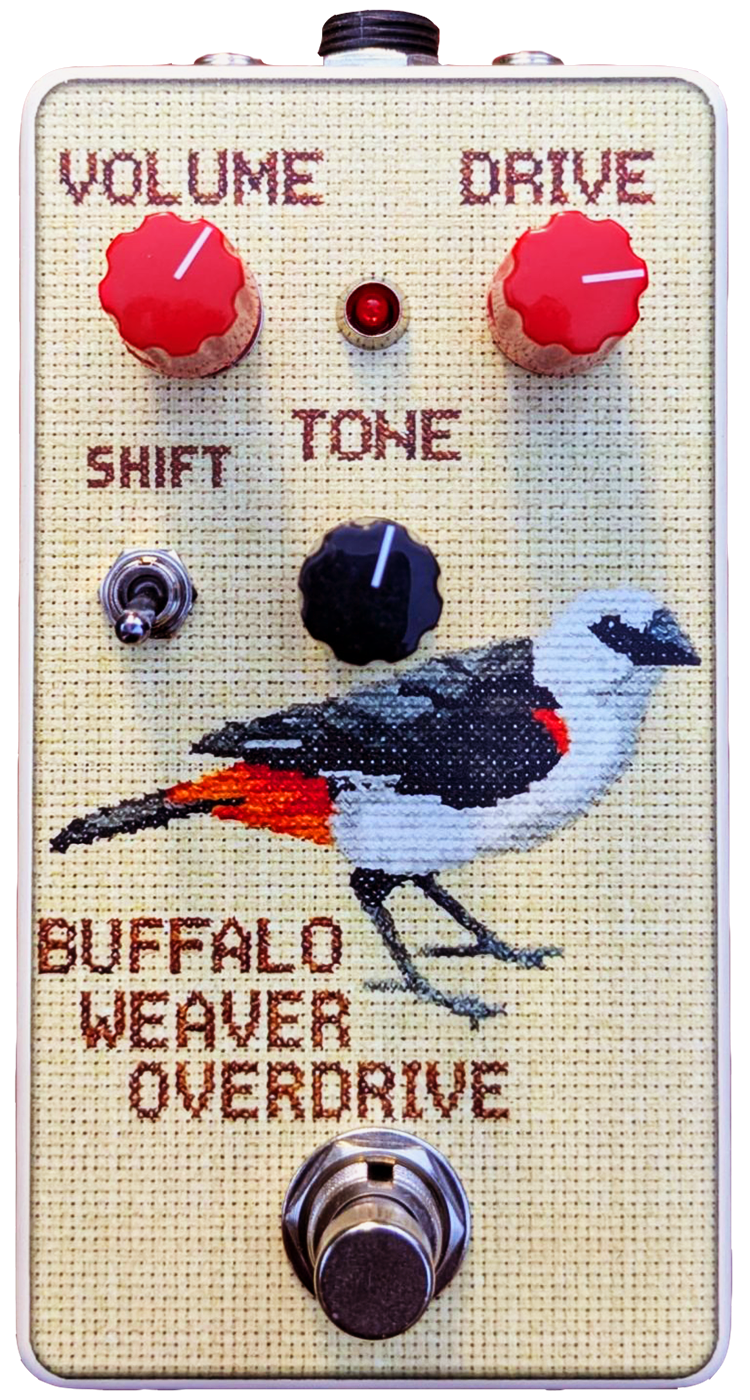
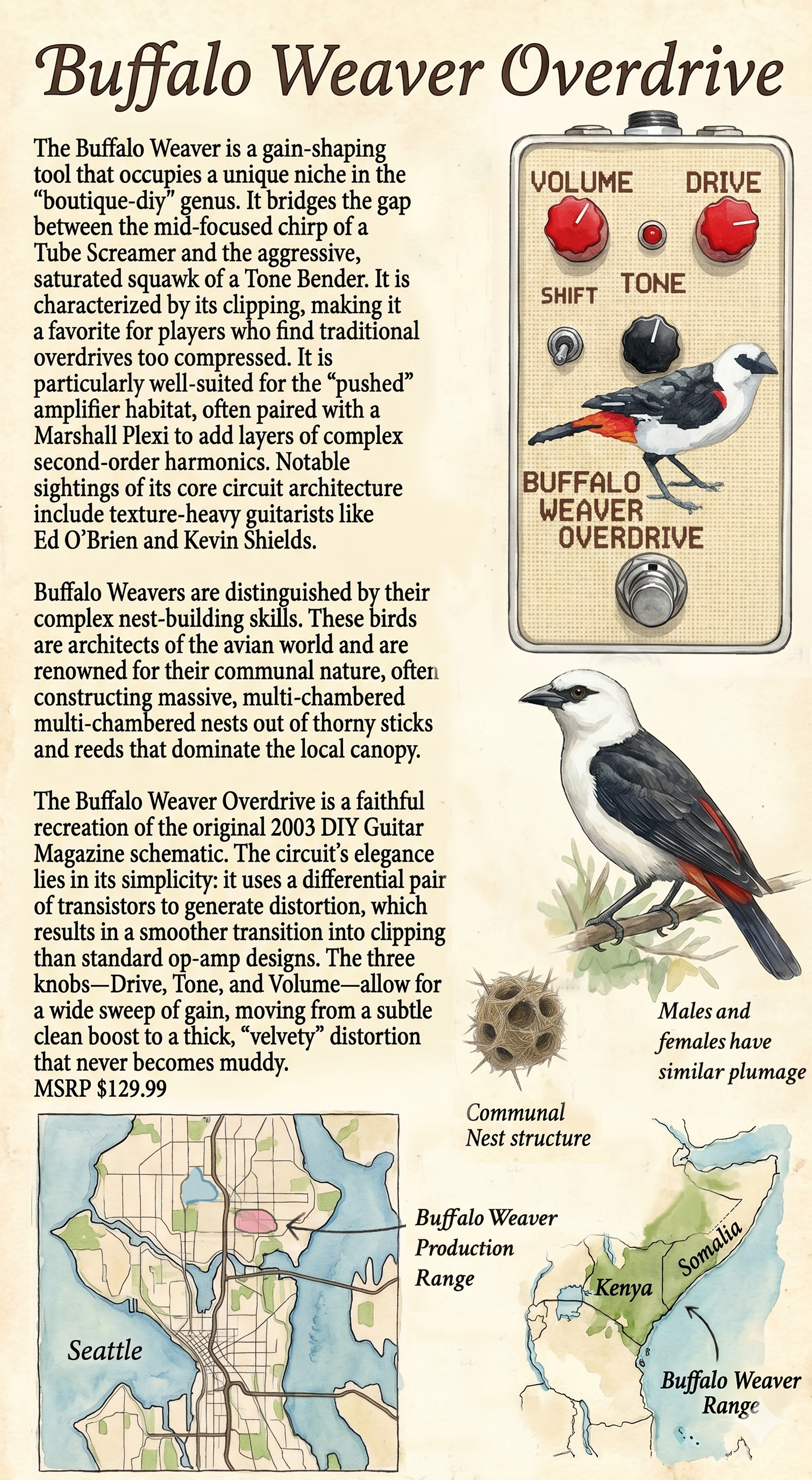
The Buffalo Weaver is a gain-shaping tool that occupies a unique niche in the 'boutique-diy' genus. It bridges the gap between the mid-focused chirp of a Tube Screamer and the aggressive, saturated squawk of a Tone Bender. It is characterized by its clipping, making it a favorite for players who find traditional overdrives too compressed. It is particularly well-suited for the 'pushed' amplifier habitat, often paired with a Marshall Plexi to add layers of complex second-order harmonics. Notable sightings of its core circuit architecture include texture-heavy guitarists like Ed O’Brien and Kevin Shields.
Buffalo Weavers are distinguished by their complex nest-building skills. These birds are architects of the avian world and are renowned for their communal nature, often constructing massive, multi-chambered nests out of thorny sticks and reeds that dominate the local canopy.
The Buffalo Weaver Overdrive is a faithful recreation of the original 2003 DIY Guitar Magazine schematic. The circuit’s elegance lies in its simplicity: it uses a differential pair of transistors to generate distortion, which results in a smoother transition into clipping than standard op-amp designs. The three knobs—Drive, Tone, and Volume—allow for a wide sweep of gain, moving from a subtle clean boost to a thick, “velvety” distortion that never becomes muddy.
Each pedal is numbered in the clutch, soldered by hand, and has a custom hand-written signal inside.